Welcome to your new site. This is an example page.
- This is a bullet list.
- Second entry.
Back to normal again.
- This is an ordered list.
- Second entry.
Back to normal again.
This is a blockquote.
Back to normal again.
This text is bold, in a <strong> tag.
This text is italicized, in an <em> tag.
This text is underlined, in a <u> tag.
This text has a strikethrough, in a <s> tag.
This text is subscript and superscript using <sub> and <sup>, which can be used for adding notes and citations.
This is an H1 title. It is bigger than the Page Title, which is rendered in H2.
This is an H2 header, the same size as the Page Title.
This is an H3 subheader.
This is an H4 subheader.
This is an H5 subheader.
This is an H6 subheader.
This is the "Italic Title" block style.
This is the "Subtitle" block style.
This is the "Marker" inline style.
This is the "Big" inline style. This is normal text.
This text is inside a "small" inline style. This is normal text.
This is the "Computer Code" inline style.
لكن لا بد أن أوضح لك أن كل هذه الأفكار المغلوطة حول استنكار النشوة وتمجيد الألم يعرض هذا النص من اليمين إلى اليسار.
Test
-
Italy in the Horn of Africa and the Ethiopian Islamic literary tradition: L. Robecchi Bricchetti and his collection of manuscripts
1. Luigi Robecchi Bricchetti: some general biographical data Luigi Robecchi Bricchetti was born in Pavia on the 21st of May 1855 and in his native town in Northern Italy died on the 31st of May 1926. He was a graduated engineer of the Polytechnic Institute in Zurich.His first long trip was to the Libyan Desert in Egypt in 1885-86. He reached the oasis of Siwa, where the famous temple of Jupiter Ammon is located. He visited the ancient ruins whose structure and decoration he described in a series of beautiful sketches. During his stay in Siwa, Robecchi Bricchetti stealthily managed to entered the wide necropolis beside the temple and to collect thirty skulls which are still nowadays kept in the Anthropological Museum of Florence and in the Civic Anthropological Museum of Pavia.In 1888-1889 carried out his stay in Harar with which I deal at some length in the following lines.In 1890 supported by the “Italian Geographical Society & he travelled to the Benadir region (an Italian protectorate since 1889). He landed in Hobyo where he was hosted for a month by the local sultan, Yusuf Ali. From Hobyo he headed northwards to explore, for the first time ever, the valley of the Nogal river which he described from a geographical, anthropological, geological and environmental point of view.In 1891 he was once again in Hobyo by Yusuf ‘Ali. From there, he went south to the Webi Shabelle which he started exploring: however, the full exploration of the river valley was realized only later by Luigi Amedeo di Savoia Duca degli Abruzzi in 1928-9 (Enrico Cerulli took part in this expedition). Robecchi Bricchetti tried to penetrate the Somali hinterland: his idea was to reach Harar from Somalia. He did not succeed, due to the Ethiopian pressure on the Somali regions. He thus decided to completely change direction and moved northwards to Berbera and the “Aromatica regio” (the land of the perfumes: the ancient Punt, where myrrh and frankincense are produced). He explored the Somali coastal regions on the Gulf of Aden and came back to Italy. This was his last travel to the Horn. -
Historical maps
Map for refernce purposes -
Bibliographic Records of Ewald Wagner
-
To The Bosphore Égyptien
On the road from Hérer, Dedjatch Mékonène, representing the King in Harar, has shipped from Harar to Shoa 3,000,000 rounds of ammunition, and other munitions that the English commissaries ordered to be abandoned for the profit of Emir Abdoullahi during the Egyptian evacuation. This whole road was impressively constructed for the first time by M. Jules Borelli on his recent trip to Harar in May 1886. It is geodesically connected to the topography and is parallel to the Itous Mountains. -
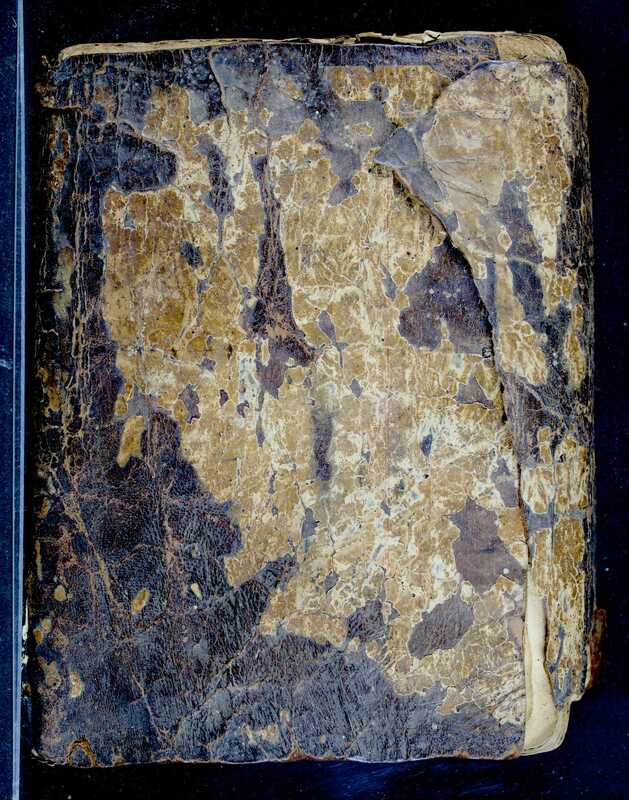
The Manuscript Bindings of Harar
-
Evolution of Smallholder Mixed Farming Systems in the Harar Highlands of Ethiopia: The Shift Towards Trees and Shrubs
The paper reports on the major changes observed in the farming systems of the Harar Highlands of southeastern Ethiopia, with special emphasis on the shift towards trees and shrubs. The study was undertaken during two time periods, 1985-1987 and 1997-1998 with the objectives of characterizing the production systems and their trends, and utilizing information so gained to guide research and extension activities in the study area. It was observed that the farming population had increased, land and large stock holding had decreased slightly, and that crop production was under increasing threats from various scourges, notably pests, weeds, and diseases. In the face of these changes, farmers continued to search for alternative strategies, and the major trend noted was the shift towards naturally growing and cultivated tree and shrub species in general and khat (Chata edulis (Vahl) Forsk. ex Endl.) in particular. This shift increased farm income and promoted crop-livestock integration, thereby improving household food security and enhancing sustainability of smallholder mixed farm systems. The importance of khat to the regional economy was also found to be growing both in the livelihood systems of the people in the study area, and in terms of foreign currency earnings. Despite the critics against the ever-increasing culture of khat, it is argued that the shift towards a khat-based farm economy was unavoidable, and, in the absence of other feasible alternatives, khat production and marketing would remain important to the livelihood systems of people in the study area. In view of this, the roles of the tree component in the farming systems should be duly considered in planning research and extension undertakings in the smallholder farms of the Harar Highlands of Ethiopia. -
Insects of cultivated and wild plants,
A serially numbered list is given of plant species, both cultivated and wild, with the insect species found associated with each in Harar Province, Ethiopia, during 1960 & 64. In a second list, the insect species are arranged under orders and, alphabetically, under families and genera, the plant species with which they were associated being indicated by numbers referring to the first list. -
Harar and Lamu: A comparison of two East African muslim societies
Abstract Comparison of the social and political structure in two Muslim urban societies in East Africa - Harar in eastern Ethiopia and Lamu on the northern Kenyan coast - from the 18th to the early 20th century. In Lamu, as in other coastal Swahili societies, political authority was supposed to be vested with representatives of the leading families who claimed long-standing local residence and financial integrity. However, rulers were hardly ever able to develop absolute power; more often their rule was of the primus inter pares type. The political structure in Harar was hierarchical with a secular ruler, surrounded by a number of appointed officials, exercising absolute power. As in Lamu, social control within the Harari community appears to have been more democratic. Women in Lamu were considered socially, intellectually, and morally inferior. They were not supposed to have any part in public affairs. Despite the custom of infibulation and clitoridectomy, the status of women in Harar was far more independent; they had an equal share in the social and religious life of the city. (Source: ASC Documentation). -
BOMBING OF HARAR USE OF POISON GAS WIDESPREAD INDIGNATION
The bombing of the people in Harar and Ethiopian army by Italian forces.... -
Entrance, in the foreground, to the ancient walled town of Harar (Abyssinia), which has been capture
Entrance, in the foreground, to the ancient walled town of Harar (Abyssinia), which has been captured by British troops. -
TROUBLE IN ABYSSINIA
2000 MOSLEMS KILLED. LONDON, April 8. The Governor of Harar killed 2000 Moslems at Jigjiga, on the Abyssinian frontier. King Menelik sends him 8000 horsemen -
An Attack
AN ATTACK. Aden, January 24 News has been received from Somauli that the Abyssinian forces attacked and completely routed the Ameer of Harar's troops. They then occupied the town of Harar. The Ameer, however, escaped.
btm
You already have access to the resource. Go back to the previous page to see it.