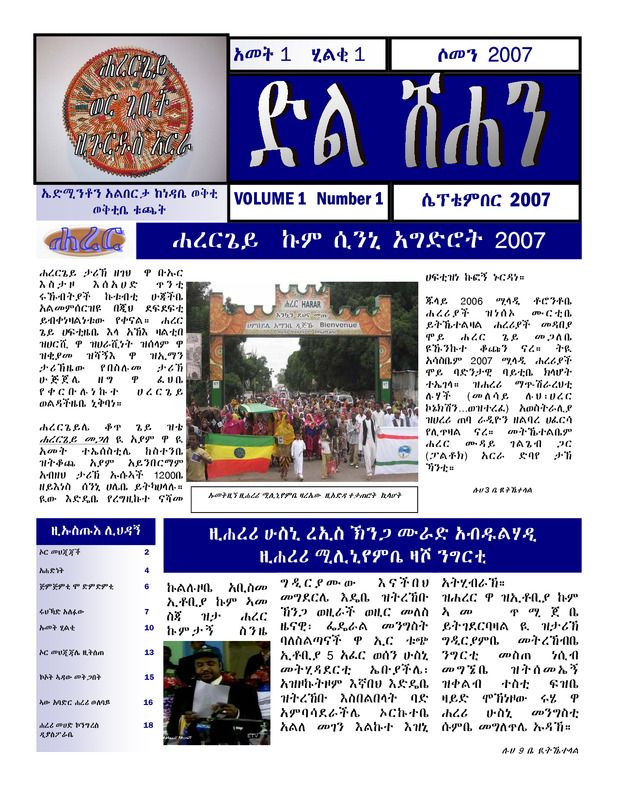
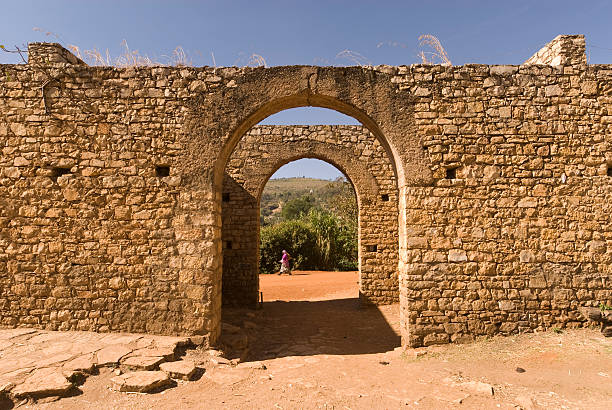
Welcome to your new site. This is an example page.
- This is a bullet list.
- Second entry.
Back to normal again.
- This is an ordered list.
- Second entry.
Back to normal again.
This is a blockquote.
Back to normal again.
This text is bold, in a <strong> tag.
This text is italicized, in an <em> tag.
This text is underlined, in a <u> tag.
This text has a strikethrough, in a <s> tag.
This text is subscript and superscript using <sub> and <sup>, which can be used for adding notes and citations.
This is an H1 title. It is bigger than the Page Title, which is rendered in H2.
This is an H2 header, the same size as the Page Title.
This is an H3 subheader.
This is an H4 subheader.
This is an H5 subheader.
This is an H6 subheader.
This is the "Italic Title" block style.
This is the "Subtitle" block style.
This is the "Marker" inline style.
This is the "Big" inline style. This is normal text.
This text is inside a "small" inline style. This is normal text.
This is the "Computer Code" inline style.
لكن لا بد أن أوضح لك أن كل هذه الأفكار المغلوطة حول استنكار النشوة وتمجيد الألم يعرض هذا النص من اليمين إلى اليسار.
Test
-
FINAL REPORT STUDY ON MEDIUM OF INSTRUCTION IN PRIMARY SCHOOLS IN ETHIOPIA
5.1.7 HARARI REGION Regional policy/practice: Three mother tongues—Harari, Afan Oromo and Amharic—are used as MOI in the Harari region from Grades 1 to 6. For Grades 7 and 8 the MOI is English for Sciences and Mathematics and mother tongue for the other content areas. For primary teacher training in the 1st cycle there are three different streams for the three MOI, but for 2nd cycle teacher training the only MOI is English. -
AFRICAN CULTURAL HERITAGE AND THE WORLD HERITAGE CONVENTION - The City Of Harar
No Abstract. Go to page 98 of the publication. -
MASTER PLAN FOR THE SAFEGUARDING OF THE HISTORICAL TOWN OF HARAR
At the Ethiopian Government's request, Unesco arranged for a consultant to go to Ethiopia to draft a master plan for the safeguarding of the historic town of Harar. This project is being financed jointly by the United Nations Development Programme (UNDP) and the Ethiopian Government, and executed by the Centre for Research and Conservation of Cultural Heritage (CRCCH) of the Ministry of Culture and Sports Affairs in co-operation with Unesco. -
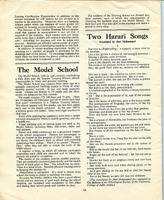
Two Harari Songs
Duri Mohammed-Translator Two songs translated into English. -
A Russian in Harar
Europeans travelling to Harar in Ethiopia in early last century found that original Islamic culture continues to be preserved in the city, which was once regarded as among the most revered centres in the Islamic world "When I was galloping along the steppe on the charger mare of the sheikh, and Arabs that accompanied me were shaking their whips, as though they were spears, and chanting war songs, to the sound of which their horses proudly raised their heads and spread their tails in the wind, I understood the fascination of their free life in this waterless country and the pride which it cultivated in its sons." — Sergei Syromyatnikov Reading an article on two Russian travellers to Kuwait and Ethiopia by Professor Efim Rezvan of the Russian Academy of Sciences, I was especially struck by his reconstruction of the travels of the poet Gumilyov in Ethiopia, even though the engaging passage I have cited above is from the other traveller, Sergei Syromyatnikov, who went to Kuwait. Both figures, one a poet and an ethnographer, and the other, Syromyatnikov, a journalist, diplomat and intelligence agent, were parts of the Russian initiative in the early years of the last century to establish relations with the lands that lay south of theirs, in Asia and Africa. Reading from a large format holy Koran inside the mazar of Sayyid ‘Ali Hamdong. Harar, 2008 And both had engaging stories to tell: the people they met, the lands they were seeing for the first time, the condition of the arts there; above all, the diplomatic push that both of them felt was needed. The era, one has to recall, was that of before the World War, and before the Czarist regime was pulled down. Nikolai Gumilyov was a poet and a writer of considerable distinction and, in 1913, the Kunstkamera Museum of Russia urged him to travel to Ethiopia on their behalf, in part, at least, to collect from their ethnographic materials and, especially, manuscripts most of which they anticipated would be in Arabic and, thus, of interest to the Islamic part of the population of Russia. Harar was the city in Ethiopia that Gumilyov spent most of his time in, for the place had a considerable reputation as a centre of learning, being regarded as the fourth most revered city in the Islamic world. The town had a long history, and over the centuries had emerged as a place for the production of manuscripts — all Islamic, mostly of the holy Koran — and for the fine craft of bookbinding. There were mosques everywhere — reputedly there once stood 99 mosques in the town, equal to the names of Allah as given in the Koran — and the sobriquet the place had earned was the "City of Saints", having been founded by 405 holy men, who had come to the place from the Arabian Peninsula. Even today, the fortified old part of the town of Harar, known as Harar Jugol, has a character of its own, something that has resulted in its being placed on the list of World Heritage sites by Unesco. It exhibits, as the Unesco statement of its significance records, "an important interchange of values of original Islamic culture, expressed in the social and cultural development of the city enclosed within the otherwise Christian region". The architecture and the urban plan of the walled city stand out on their own. The title page of the Gulf Diary (in Russian) of Sergei Syromyatnikov When Gumilyov visited it, he spoke of the city as looking "gorgeous with its houses made of red sandstone, high European buildings and pointed minarets of mosques. It was surrounded by a wall and people were not allowed to get through the gates after sunset. Inside, it looked exactly like Baghdad in the times of Harun al-Rashid with its narrow streets going up or down like stairs, massive wooden doors, squares full of noisy people in white clothes, the court right there in the square — all of that was full of old fairy-tale charm." After spending time in Harar, and having travelled to other, not easily accessible, places in Ethiopia, Nikolai Gumilyov returned home but not before he had acquired a large collection of manuscripts and book covers, as also sets of tools used by bookbinders and scribes. These objects entered the museum, which had sponsored his visit, but the times were unfriendly. The next year war broke out; then came the Bolshevik revolution and the civil war. His collection survived but the poet himself was executed by the Soviet secret police in 1921 on the suspicion of his having hatched a counter-revolutionary plot. Before his death, however, the poet had written a poem in which he spoke of his having "led a caravan for eight days from Harar/Through the wild Chercher Mountains/…A mysterious city, a tropical Rome, I saw tall Sheikh Hussein, I bowed to/ the mosque and to the holy palms/ and was admitted before the eyes of the Prophet." Gumilyov was not the first European to have landed in Harar. Well before him, the legendary Sir Richard Francis Burton (1821-1890), , explorer, translator, writer, soldier, orientalist, cartographer, ethnologist, spy, linguist, poet, fencer and diplomat", had visited the city in the 1855 and left a characteristically wry but graphic account of the town and its inhabitants. The celebrated French poet, Rimbaud, also spent some time in Harar as a trader in the 1880s. Each time some things must have changed. But apparently some things in the town continued to be what they were before. For when, in 2008, another expedition sent by the Kunstkamera Museum visited Harar, they found the same reverence and care for manuscripts that the Russian poet had encountered close to a hundred years before. As Professor Rezvan, who was part of the 2008 expedition, writes: "When we visited Sheikh ‘Abd Allah Musa, a keeper by birth of Sayyid ‘Ali Hamdong’s mazar, we listened carefully to the Sheikh, who took out (with great simplicity) a wonderful large format Koran manuscript and, then, a number of folios from a metal lock-box, telling us about the saint he worshipped." The manuscripts as well as their covers, he ends by saying, were of really high quality. Clearly some things had remained virtually unchanged in Harar. -
East Africa handbook
Travel, Eating places in Harar. Travel Guide. -
Sweetness in the Belly
Fiction, Love story in Harar -
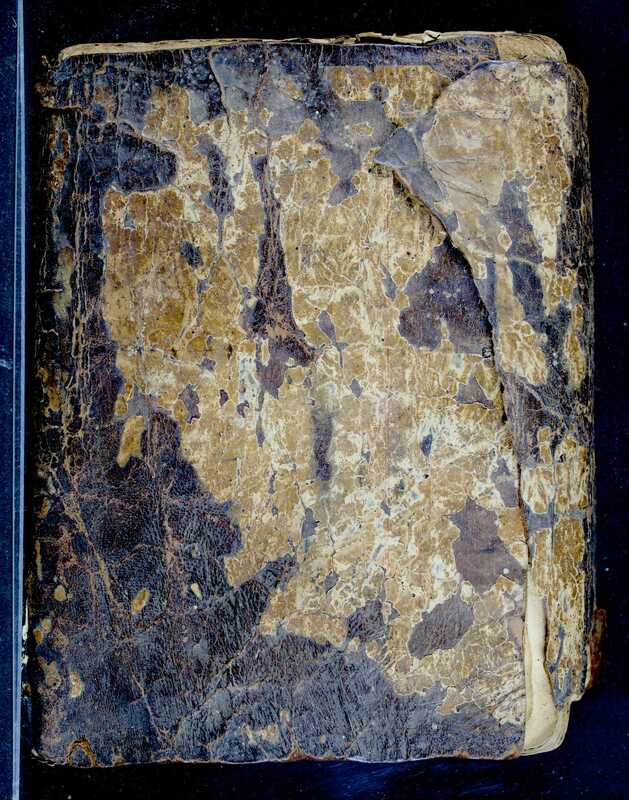
Antique Koran manuscript Prayer Book Ethiopia - Harar
Antique ManuscriptSold Date: 01/06/2008 Channel: Online Auction Source: eBay Category: Books, Paper & MagazinesFrom Harar - East EthiopiaAn old and large Islamic prayer book This old prayer book made from Ethiopia has over 200 pages. Altogether the book is in its age a corresponding condition. Height approx. 34cm, width approx. 24cm<p -
Islam in world cultures: comparative perspectives
-

Harari Alphabets
INTRODUCTIONModern Harari is the language of the Harari people of Ethiopia. The old Harari language waswritten using the Arabic script. When Harar became part of Abyssinia, the Ethiopian (Geez)script was introduced for Modern Harari.Within Australia, Harari children are taught the Harari language using the Latin script. Theexisting Ethiopic and Arabic orthographies cannot represent all the sounds in the Hararilanguage. Revisions to the Ethiopic and Arabic orthographies have been discussed in Ethiopiaand Australia.This document will outline character repertoire requirements for the Latin orthography and therevised Ethiopic and Arabic orthographies. -
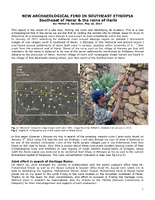
NEW ARCHAEOLOGICAL FIND IN SOUTHEAST ETHIOPIA Southeast of Harar & the ruins of Harla
This report is the result of a site tour, finding the ruins and identifying its location. This is a new archaeological find in the sense we are the first to visiting the remote site to initiate research study to determine its archaeological value though it was known to local inhabitants within the area. In January of 2013 searching for medieval ruins around Hararge region on satellite I discovered images of ruin villages south & southeast of Harar, in Ethiopia. In this historical and ancient region I also found several settlements of stone built ruins in various locations within proximity of 5 – 13km apart from the medieval wall of Harar. Some of the ruins such as the village of Harawe gei that still maintains its old name is believed to be one of the seven settlements mentioned by Professor Ahmed Zakaria as the precursor of Harar. Another village of ruins with rectangular shape homes are found in the village of Awe Barkhadle among others, just 7km south of the fortified town of Harar. -
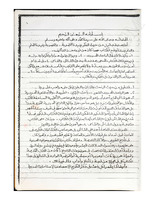
Tarikh Al Harar ( Harar History)
Harar history. Arabic Text
btm
You already have access to the resource. Go back to the previous page to see it.