-
(From Page 42)
“In the first place I hired a hut belonging to a Mohamedan woman a native of the place, a widow with two children; her husband had been killed on his way to Harrar by the Adaiel. Her name was Miriam; she acted as my housekeeper, so that I had not the trouble of attending the markets. The hut was nearly circular, with a sort of box attached to it about ten feet in diameter; my bed was placed in the box or recess. There was a rude court on one side for visitors, the kitchen on the other side; so that it at once formed bedroom, parlour, and kitchen. It wag so scantily thatched that it would keep out neither wind nor rain— quite a Jack Straw's house.
A few evenings after I had taken up my abode there, Hajji Sayad being in the hut, my worthy hostess, having prepared coffee and burnt frankincense, asked Sayad to say a prayer; he quoted part of the Koran, and concluded with " May the Most High God protect and preserve him from all his enemies, and may he return to his father's house in peace!" my hostess continually repeating " Ameen, Ameen." I was indeed much affected, for they both appeared to be sincere. During a sojourn of three months I experienced many acts of kindness from these poor people; verily they acted the part of good Samaritans.”
-
TRANSACTIONS OF THE BOMBAY GEOGRAPHICAL SOCIETY 1847 – 1849.
By Bombay Geographical Society
“ART. VIII.—Memoir on the Western or Edoor Tribes, inhabiting the Somali Coast of N. E. Africa; with the Southern Branches of the Family of Darrood, resident on the banks of the Webbi Shebeyli, commonly called the River Webbi. By Lieutenant C. J. CRDTTENDEN, Indian Navy, Assistant Political Agent at Aden.—Dated Aden, 10th April, 1848.”
“The city of Hurrur, in the province of that name, though hardly in the Somali country, is closely connected with it by its commerce, especially by its slave trade. Mr. McQueen, in his valuable Geographical survey of Africa, places it, in my opinion, too far to the southward and westward; It is eight days’ journey for a kafila of camels from Zeyla to Hurrur, and nine days from Berbera, and this would place it in about Latitude 9°22′ N. and Longitude 42°35′ E.
A tradition exists amongst tht people of Hurrur, that the prosperity of their city depends upon the exclusion of all foreigners not of the Moslem faith, and Christians are especially interdicted. From what I have been able to gather, the traveller would hardly be repaid for the risk and fatigue that he would have to undergo ; and if he travelled as an European, he would be exposed to much insult and ill feeling from the bigoted ruler and inhabitants of the place, who, sunk in the lowest ignorance, still plume themselves upon their superior sanctity as followers of the true faith.
The Government, founded, in all probability, during the reign of Suleiman the Magnificent, when the Turks held possession of Aden, is hereditary, and held by an Emir, all of whose male relatives, as was formerly the case in Shoa, are closely imprisoned, as a guard against domestic treachery. The Emir’s house is perpetually surrounded with guards, and no one dares to pass the gate of the court-yard mounted, or at a walk—he must cover his face and run. The Emir’s guard is composed of perhaps sixty matchlock-men, and ho has also a body of native spearmen in his pay.”
-

-
-
-
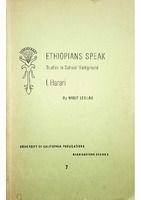
Harar is discussed from page 69-92.
-
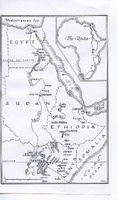
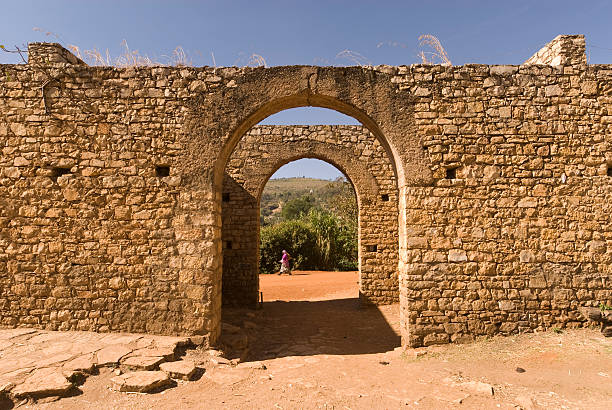
ONLY TWO TRAINS a week ran on the Ethiopian line to Djibouti,across the low hills east of Addis Ababa and the rubbly plain to the Ethiopian town of Dire Dawa. From there I could go by road into the mountains to the old walled city of Harar.
-
-
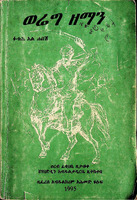
Translation of Fathul Habash
-
Imam Ahmed History
-
-
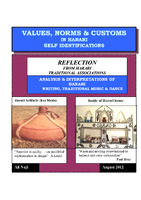
This writing is to explore the Harari traditional associations of prerevolution, to trace the shared notion as the string of fiber and fabrics from past to present, to disclose the strength of theingredients embodied and subsequently, unfold the Harari self identifications inherent in the mind setup that distinguishes and identifies Hararis.The text secondly, intends to have reflectioninculcated in the conscience,from social perspective, furnished and depicted in the historical phenomenon, and so the text endeavors to get across these ideas to the contemporary generation.Thirdly, I explicitly express my own understanding and feeling, on the above two basis conclusively share with others, and reach the concernedgeneration to sustain itsubstantiallyconclusively.Thus,I focus on few important factors, to function and maintain as factors unifying embodied inHarari social institutions of afochas, bahas,mugads, as well as the Pan-afocha-firmatch.