-
The Indian presence in Ethiopia has attracted little attention in Ethiopian historiography. Yet Indian businessmen were as instrumental to Ethiopia’s early 20th century economy as they were in British East Africa at the same period. As part of a broader research project aimed at addressing this gap, this article explores the life and achievements of Mohamedally Shaikh Sharafaly, the best known of these Indian businessmen, who set up one of the largest commercial and industrial businesses in Ethiopia. The account follows the narrative of an un-published letter the merchant wrote in 1940 about his business trajectory. From his arrival in Harar in the late 19th century to the eventual expulsion of his company in 1937, his story is highly revealing of the political context in which large foreign businesses would emerge, involving both friendship with the Ethiopian emperors and diplomatic protection, in the case of Indians as British subjects......
-
p r o p o s i t i o n d e s é q u e n c e h i s t o r i q u e p o u r l e s s i t e s d u č̣ä r č̣ä r
Les « Harla » sont une population qui apparaît à partir du xiiie siècle dans quelques
sources écrites anciennes d’Éthiopie ou relatives à l’Éthiopie, telles que le récit des guerres
d’Amdä Ṣǝyon, souverain chrétien du xive siècle, ou le Futūḥ al-Ḥabaša (xvie siècle), récit
du ğihād musulman lancé au début du xvie siècle par des musulmans d’Éthiopie contre le
royaume chrétien2. Des populations actuelles d’Éthiopie s’appliquent à elles-mêmes ou
se voient appliquer…
-
…..Investigating the origins of Harar archaeologically is one of the primary aims of the
research project “Becoming Muslim: Conversion to Islam and Islamization in Eastern
Ethiopia” funded by the European Research Council (ERC-AdG-2015 694254-BM) for
which Timothy Insoll is Principal Investigator. This is a project exploring the contexts
of conversion, i.e. why certain sub-Saharan African cities such as Harar were
key points for conversion to Islam, and the processes of, and factors influencing conversion,
which besides genuine belief include the impact of trade, Saints, Sufis and
Holy men, proselytization, benefits gained from Arabic literacy and administration
systems, enhanced power, prestige, warfare, and belonging to the larger Muslim
community.
-
A Preliminary Fieldwork Report
In July-August 2014 surveys and test excavations
were completed in Harari Regional State in
eastern Ethiopia. The primary aim of the fieldwork
was to begin to reconstruct a chronology and ceramics
typology for the city of Harar and outlying
settlements such as Ganda Harla and Koromi (cf.
Insoll 2003: 78). A secondary aim was to start to assess
the myths and legends linked with some settlements
and populations in the region – be it Arab
origins for the Argobba (cf. Asfaw 2000: 174-175),
or great physical stature for the Harla (cf. Chekroun
et al. 2011: 79; Joussaume 1976: 32)….
-

Correspondence Letteres between Jewish council, US, and Ethiopia ......My proposal is to unite the so-called HARRAR-territory of Ethiopia with part of British-Somaliland and create there a state for the European Jews.....
-
The subject under consideration in this dissertation is various values of a particular society who refer to themselves as gey usu (people of the city). To expound how they utilize values to regulate their members’ behaviors and the relations they have with other people four entities are identified: Family, educational, trade and social institutions. Family as the basic institution is discussed to expound how birth and marriage ceremonies are perceived by Hararis. How these events are surrounded by various symbols with the values enshrined in them, which are expressed through rituals, actions, words and gestures, are as well expounded. The mechanisms how these symbols are used to regulate individual and social behaviors are also discussed. Education as one of the vital instruments to develop the individuals and the society which should enjoy continuous sufficiency and prosperity is also discussed. How successful the society is in achieving these goals is dependent on the values the education system is promoting. Trade, which is much related with Harar and Hararis history, how it is used as a means of securing and maintaining peace through concessions to other people is discussed. This dissertation suggests the underlying ideas of peaceful trade are values such as righteousness, honesty, sincerity, diligence, trust, non-discrimination and fairness in the relations among traders. The Harari social institutions are used to control the behaviors of their members and the relations the community should have with other communities
-
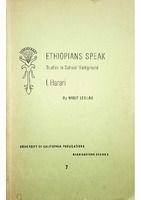
......This book presents the history of Harar and the Harari people, from ancient times to the 1990s aims to: o Offer a general overview of the origin of the Harari people; o Narrate the kaleidoscopic political history of Harari people and the City of Harar from early times up to the 1990’s; o Explain the historical dynamics of Harar’s sophisticated economy; o Analyse the time tested social organizations of the Harari people; o Discuss the rich cultural values of the Harari people, and o Elaborate the contribution of the Harari civilization to Ethiopia and its influence an Empire and City-State in eastern Ethiopia and the Horn of Africa.....
-
Mango production covers 35% of the total acreage allotted for fruit production in Harari Regional State, eastern Ethiopia. However, there is a declining trend in yield and quality of fruits from the trees. Therefore, this study was conducted to assess the status, practices and challenges of mango production in the study area.
-
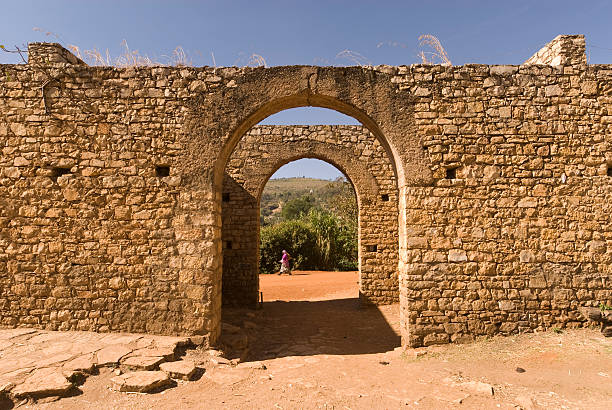
The fortified historic town of Harar is located in the eastern part of Ethiopia, 525 km from the capital of Addis Ababa, on a plateau with deep gorges surrounded by deserts and savannah. The walls surrounding this sacred city, considered “the fourth holy city” of Islam, were built between the 13th and 16th centuries and served as a protective barrier. There were five historic gates, which corresponded to the main roads to the town and also served to divide the city into five neighbourhoods, but this division is not functional anymore. The Harar gate, from where the main streets lead to the centre, is of recent construction.....
-
Historically, Harar as a trade center linked the high land of Ethiopia with the rest of the world. While merchants were taking out from and bringing in products and services to Harar they were taxed by various institutions.
-
Abstract This article chiefly discusses the traditional secular music of the Harari community residing in the Harari People's National Regional State, one of the nine Ethiopian administrative regions (Kələloč). In doing so musical styles such as Saley, Ğaliyei and Dersi and their distinct features (melody, rhythm, and lyric) will be taken into closer consideration.
-