-
A survey on camel meat productivity and consumption was conducted in Jijiga and Harar towns in 1999. Almost all the camels slaughtered were adults, predominantly males. Measurements of height, hump girth and thoracic girth were used to estimate the live weight. All the measurements were significantly greater in the male than in the female camels. Average live and carcass weights were 400 and 211 kg, respectively. Males were significantly heavier (p < 0.05) and had better dressing percentages than females. The carcasses contained averages of 76% meat, 12% fat and 20% bone for both males and females. The difference between the males and females was not significant for the ratio of meat and bones, except for fat, which was higher in the males. Camel meat is regarded as a high-quality food with medicinal value and as a least-cost source of meat. Camel meat is preferred to that of any other livestock by some people, particularly by the Somalis in Jijiga town. It is also more available, especially during the dry season when beef is in short supply. Hence, camel meat is a socially acceptable, economically viable and environmentally adaptable alternative source of meat, consumption of which should be encouraged.
-
These defense forces were very important for the Ottomans for protectionof Africa's Eastern coasts. Because if Portugese rule contained Arab peninsulaand Red Sea it would be very difficult fort he Ottomans to be dominantpower in the region for long time. It is for this reason that the Ottomansfelt the need to strengthen the Mamluki defense forces immediately. With the help of this forces that the Ottomans had the opportunity to helpSultanate of Harar in today’s Etiopia. By means of this valuable assistanceSultanate of Harar won victories against Christian kingdom that was receivinghelp from Portugal.
-
"As far as it can hitherto be stated the Harla were the oldest identifiable population in the Harar Plateau. Between the 14th and 16th centuries they possessed the highly developed peasant civilization with urban center and stone architecture. When Abadir (Umar, Al, Rida), the legendary ancestor of Harari, reached Harar in the early 13th century, he was acknowledged by the Harla, the Gaturi and the Argobba"
-
"Action Research to save some endangered pearls of Eastern Ethiopia offeringa developed and complete tourism route as an economic alternative to theirrapid and irreversible destruction. Reports from two missions in early 2008.Dedicated to the Presidents of the Regional States of Oromia and Harari.
-
This article addresses the problem of coronal palatalization in Harari (Ethiopian Semitic) triggered by the 2nd person singular feminine non-perfective subject suffix /-i/. The palatalization process is unusual in two respects: (a) palatalization operates at a distance over other vowels and consonants and (b) palatalization may optionally affect more than one coronal consonant in the same stem, including prefixes. Although long-distance palatalization has been documented for other languages, it has been analyzed either as a floating affix or as consonant harmony. While Harari palatalization shares properties with both of these phenomena, it should be analyzed as neither. Harari palatalization targets a specific group of consonants and is modeled using a correspondence agreement constraint rather than aligning or spreading the palatalizing feature. This accounts for its ability to skip over intervening consonants and vowels, including front vowels and palato-alveolar consonants.
-
The survival of the Semitic-speaking, Muslim townsmen of Harär in the midst of animist Oromo who migrated into the eastern highlands of modern Ethiopia in the late sixteenth century and settled as pastoralists is something of an anomaly, at least in the eastern Rift. Other pre-migration settlements of Muslim farmer-traders, presumably also speaking a southern Semitic language, appear to have been submerged and displaced. The Haräri’s good fortune is not to be explained by their use of firearms and simple fortifications. Economic interdependence, the awe the newcomers felt for the town’s saints and the greater cohesion of the townspeople probably played a greater role than mere self-defence.
A balance of power was needed, however, if the town was not to be swamped. This equilibrium seems to have been upset at the very time that the trade of the Red Sea and Gulf of Aden was revived by Egypt in the second quarter of the nineteenth century. Neither the succession to the amirate of pacifist princes nor the betrayal of the town to outsiders by the half-Oromo ruler, Amir Muhammad ibn Ali (1856–75), can correctly be blamed for this reverse although these are the excuses given in Haräri tradition. Rather, the repeated appeal to sections of the Oromo by factions within the town in struggles for the throne from the 1820s led to the Haräri becoming clients to neighbours who were still overwhelmingly animist herders little concerned with the commerce on which the townsmen’s prosperity depended and little attracted to the titles and Muslim insignia with which the amirs rewarded those of the cultivating Oromo minority who paid taxes and rents in grain and supplied the town with other foodstuffs and its market with crops for …
Though denigrated in the town’s traditions, Amir Muhammad ibn Ali began the systematic proselytization of the surrounding Oromo and sought to induce more of them to cultivate crops for sale. Conversion and farming for the town’s market, along with the appointment from the town of officials to replace the Oromo’s elected officers, were the means by which, during the Turco-Egyptian occupation (1875–85), rulers with greater military resources obliged the confederation of the four great Oromo clans around the town (the Afran-Qallu) to adopt a way of life more in harmony with the interests of the townsmen. Despite the conquest of Harär and the surrounding Oromo and Somali by non-urban, Christian Ethiopians in the brief reign of Muhammad Ali’s son, Amir Abdallahi (1885–7), the Islamic and mercantile legacy of the town was deeply enough rooted by then to flourish among the Afran-Qallu and to distinguish them, like the Haräri themselves, from their conquerors.
Footnotes
1 An earlier version of this paper was presented to the International Congress of Africanists, Addis Abäba, Dec. 1973. In revising a seminar paper first given at a faculties’ seminar in 1968, I have been much indebted to Muhammad Hassan, ‘The Relations between Harar and the surrounding Oromo between 1800–1887’ (unpublished B.A. thesis, History Dept., Haile Sellassie I University, 1973) for guiding me in the study of Afran-Qallu traditions; I am also grateful to my former colleague, Professor S. Rubenson, for microfilms of the documents from the Egyptian archives cited below.
-
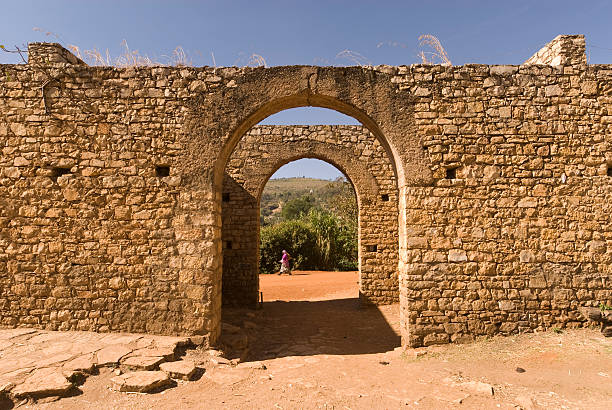
In my last post I wrote about how Harar is an alluring walled city that made me throw away my travel plans and stay for three weeks. A serene atmosphere and an ever-widening circle of knowledgeable, hospitable acquaintances were what kept me there, but what is there to actually see? Plenty. The main attraction, of course, is the city itself, with its crowded markets, quiet back alleys, and mixture of Ethiopian, Egyptian, Arab, and Italian architecture. A long wander in the Jegol, as locals call the old city, will give you a feel for life in this unique place. Don't worry about getting lost. While the winding little alleyways make it inevitable, the city is so small you won't stay lost for long. Walking at night is safe and very romantic with the right company and a full moon.
-
Ethnicity and federalism is briefly discussed. TheHarari state formation and the Historical andcultural reasoning enlight of the present day federal republic of ethiopia is given focus. Please go to page 230 to read about Harari State.
-
-
-
David Vô Vân, Berhanou Abebbé, Mohammed Jami Guleid - H&#257;rer (Ethiopia) - 2007 - 99 pagesno preview Available </
-
Describes the houses in the town of Harar Ethiopia. Plans and photographs illustrate the evolution of the arrangement of the city, flourishing from the 17th century until the end of the 19th century. Born in the 8th century, it is the great fourth Holy City of Islam and is experiencing a specific urban culture.