-
-
Previous issues of this journal have carried information about early nineteenthcenturyvisits to the northern coast of Somalia by John Studdy Leigh, whoclaimed that he and not Richard Burton was the first European to succeed inpenetrating inland to the city of Harar. Leigh's claim was made in 1892 and hesaid his trip had been made in 1838-1839.1 Although Marcus and Page gave somecautious credence to Leigh's story, Kirkman subsequently showed that theevidence of Leigh's own journal proved that although he had been at Berbera in1838-1839, he had definitely not gone inland to Harar.2 The journal entries alsothrow doubt upon another of Leigh's assertions of 1892: that the people ofBerbera regarded him as "the first European that has visited . . . within .
-
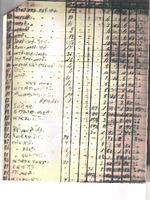
The document lists names of Hararies wanted by Haileselasie goveronment as stated for their involvment in the Harari Movement of the 1940s. The persons named are accused of multiple charges, some supporting the movement, emigrating , for mailing letters from and to foreign countries and others with charges of propagnda and financial assisstance. Document available In Abdela Sherif museum
-
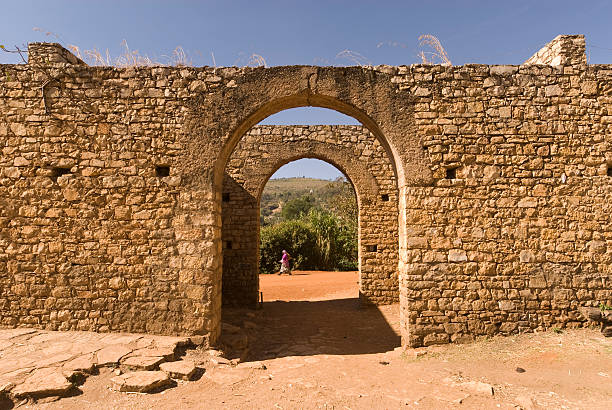
If you're staying for any length of time in a place, the best way to experience the local culture is through a home stay. Luckily Harar has a number of traditional homes offering spare rooms.A local guide showed me a few and I chose one hidden away in a small alley not far from the Catholic mission. This is the neighborhood that got Harar a UNESCO religious tolerance award because there's an Ethiopian Orthodox Church, a Catholic mission, and several mosques all within sight of each other. Walking home I use three minarets and a giant cross as landmarks.Harari homes look inward. All you see is a gate that leads to a compound of two or more houses, hidden behind their own gates. Enter the second gate and you're still not inside, you're in a courtyard with the bathroom to one side and to the other a large, ornately carved wooden door leading to the main building. Harari homes have a unique architecture. With thick stone walls and small windows, they stay cool even in the scorching heat of the day. Leaving your shoes at the front door, you enter the nedeba, or living room. The walls are covered in colorful plates and baskets and often cabinets with multicolored glassware. Hararis love to decorate their rooms with the products of their centuries-old crafts. People sit on a series of platforms, reclining against pillows. The platforms are painted red in memory of those who died at the battle of Tchellenqo in 1887, when the Ethiopian Emperor Menelik II defeated Harar's Emir Abdullahi and the city lost its independence.Where you sit depends on who you are. The amir nedeba is where the head of the family sits. It's on the highest platform, usually in one corner where he can see the entrance to the compound. In olden days there was a spot for keeping some spears right next to the amir nedeba, just in case the person entering the compound wasn't welcome. After a month in Harar I've only seen one guy who regularly carries a spear, though.
-
The Authour presents the untold story of Chelenqo and it's aftermath. A narration of Hararies and a document content is manifested in the article. Criticism of the History depicted by Historical books is also reflected.
-
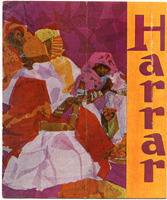
Harar Harrar is these things, and Harrar is much, much more. The city is set high on the southern ridges of the Eastern Escarpment, overlooking the wild bush of valleys draining into Webi Shebeli country. Harrar is remarkable for climute alone, as its dry air, almost cont in uous sunshine, and pleasantly monotonous average temperature of 71.5 degrees F. lure the visitor with a sense of well-being unmatched elsewhere.
-
Travel account of The Author in 1930s.
-
The theses dissertation reports are dedicated in assessment of the effectiveness of the upgrading and revitalization intervention strategies in Harar city, which include, The Cultural Gentrification Approach in JAWCH, implementation of the Integrated Housing Development Program of the Federal Democratic Republic Of Ethiopia in Harar City, the contribution of the Redevelopment Of Private Investor Developers and Analysis Of The Housing Policy of the Harari National Regional State towards development of New In Situ Model of upgrading and revitalization strategies, to reduce slums, to combat slum formations and to alleviate worsening situations of slums and squatter settlements through housing condition improvements, specifically, and improvement of the site conditions, in general. Three areas are selected to conduct the whole dissertations, case study area one is the Jugel Ancient Walled City of Harar (JAWCH), from which demonstration of the effectiveness of the cultural gentrification approach in the locale is presented. Case study area two and three are outside the JAWCH from which the rest of the work, that are, in assessment of the effectiveness of the IHDP of the FDRE in Harar city; and redevelopment of the slum sites by private investors towards their contribution for housing improvements of the slum house holds, as well as for alleviation of increasing demand of housing as a result of urbanization, emigration and population growth in Harar city. Generally, the theses dissertations argue and evidence that all the above stated strategic approaches have their own contribution in reduction of the slum conditions. However, it is identified that they are not that much in prevention of new slum formation, which is a part of Millennium Development Goal 7, target 11 cities with out slum objective of UN‐Habitat, 2000.
-
Interview with Hararis regarding the 1974 Muslim Rally held in Addis Ababa. Brother Dr. Ahmad Kelo, one of the leaders and organizers of the event, explains in detail the purpose and outcome.Brothers Mohmmaed Sherif,and Ibrahim Abdusalam also discuss the Historical and Political effects of the Rally on the entire situation of Ethiopia.
-
This presentation briefly introduces research into four museums in Harar, Ethiopia,highlighting the role that local actors played in the establishment, development andpatronage of these cultural heritage centers. Research into the traditional crafts,artisans and museums of Harar, found that recent conservation efforts resulted fromlocal initiatives and subsequent effective joint management of tangible heritage by acommunity working in conjunction with indigenous organizations, governmentadministrators and foreign interests. Without doubt, the local community’s efforts in thecontext of Harar’s museums exemplify the potential of indigenous resourcefulness increating opportunities for both preservation, and public presentation of folk customsand contemporary cultural practices.
-
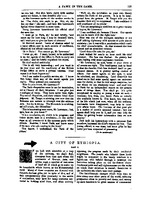
This article is an extract from the Chambers Journal of the 6th Series Volume XI 12-1907 to 11-1908 [Published in 1908] This article is both parts of the discussion about Harar.Submitted by a Friend of Harar and Ethiopia
-
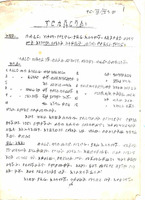
The Harari Administrations' Meetting to quel the Culub movement. The discussion and decision of the gathering is reflected in the Article. Names of participants including Prince mekonnen's views about the insurrection, and actions to be taken against the leaders of the movement , Information gathering , Introgation, imprisonment and subjugation of the Harari people to discourage them from such actions is presented. Language of Article is Amharic