
Journal
- Title
- Journal See all item sets with this value
Items
-
The Great Ethiopian FamineAuthor: RICHARD PANKHURSTDate:Clemente da Terzorio, describing the situation at Harar, writes for example of large numbers of flies which after sucking the putrifying matter of corpses then landed on the living.178 The eating of decaying and other impure food may also be presumed to have had effects very detrimental to health. The result was that smallpox, typhus, cholera, and dysentery made their appearance in many parts of the country and carried off large numbers of people.179 Wurtz relates that the incidence of smallpox in particular was greater than ever before, and adds: "people died in masses;
-
Annual ReportAuthor: Annual ReportDate: 2009Climate Change awareness raising workshops were conducted in two branches (Wolaita and Harar) for school teachers. The workshops conducted in the last quarter of 2008, gave them a basic understanding of climate change, its causes and effects, and appropriate ways to reduce the impact of disasters resulting from climate change. In total, 200 teachers took part in the awareness raising workshops, most of who were already involved in the Red Cross movement through running HIV and AIDS or environmental protection clubs in their schools. • In order to enhance the ERCS’s ability to respond to emergencies, contingency stocks were built up in several locations across the country. Three branches were selected for prepositioning of non-food relief items – Harar for Eastern Ethiopia, Addis Zemen for Northern Ethiopia and Wolaita branch for the south. It was not possible to conduct a warehouse survey before selecting these locations, but in the west a warehouse survey was carried out in several branches at the end of December 2008.
-
World War, SOUTHERN THEATRE: Key TownsAuthor: Time MagazineDate: Monday, Mar. 31, 1941Wherever three or four women squat beside piles of grain and peppers, there is Harar's market place. Before the town's Law Courts there is a constant babel of dissatisfied litigants. In five minutes on any street one may see an Armenian fighting with a Hindu; an Abyssinian woman with her simian face smeared with rancid butter to keep vermin away; an old bishop who knew the strange, sad, lame poet-adventurer Rimbaud, France's Byron, when he lived in Harar; a beautiful, brown-skinned, high-breasted Harari woman carrying a load of wood on her head as if it were a tiara ; a big black with a lion cub on a leash; an Abyssinian policeman who looks ferocious with leaves stuffed in his nostrils (he just has a cold) ; a leper from the Capuchin colony outside the walls; a crisp Italian officer in a fever of hurry and worry. In a special fever last week were the Italian soldiers stationed in Harar. For the city had become the next British objective. Early last week the South African and British column pushing up from Italian Somaliland approached Giggiga, 50 miles east of Harar. Its supply lines were then about 600 miles long, and were potentially threatened from the east by Italians garrisoning British Somaliland, which the Italians occupied last summer. The threat was removed at the strategic moment by a British naval force which appeared off Berbera, British Somaliland's capital and main port, one midnight, and landed men and machines in two places near the town. By 9:30 a.m. they had taken it. They pushed inland at once, and by week's end had very nearly made contact with the inland column.
-
World War, SOUTHERN THEATRE: Last Act in East AfricaAuthor: Time MagazineDate: Monday, Apr. 07, 1941Harar fell the same day as Cheren to a British column advancing from Somaliland in the south. Italian resistance in Marda Pass before Harar was surprisingly light, and the British met almost no resistance at Harar itself. This column's mission—breaking the Addis Ababa-Djibouti railroad—was accomplished at week's end when the British announced they had occupied Dire Dawa, the nearest station to Harar on the railway, and that the Italians had withdrawn westward toward the capital. Main reason given by the Italians for this withdrawal was again British air activity. All week long and all along the railroad, the British bombed trains, supply depots, bridges, tracks. With their communications cut behind them, the Italians at Harar were forced to retire
-
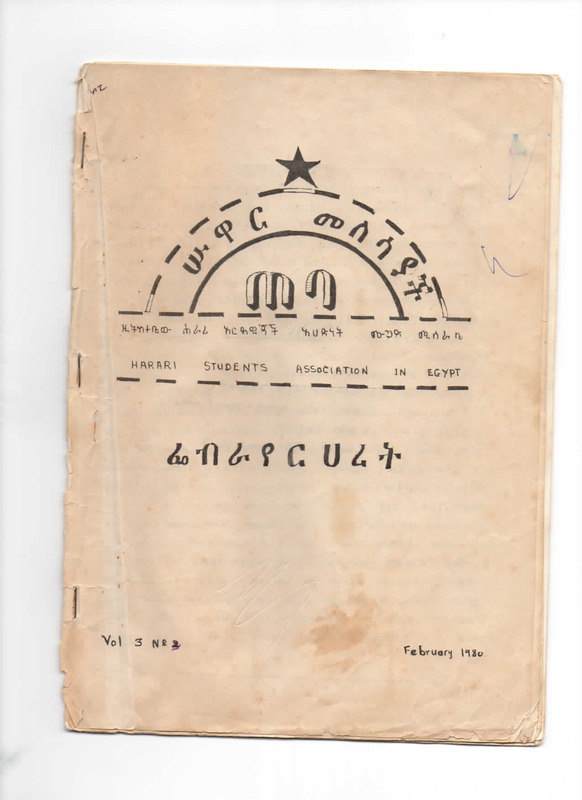 Sawar Malasayach V3.No.3Author: HarariesDate: 1980Sawar Malasyach is a magazine written by Hararies Living in Exile, in Egypt. The paper addresses the Harari struggle against oppression.
 -
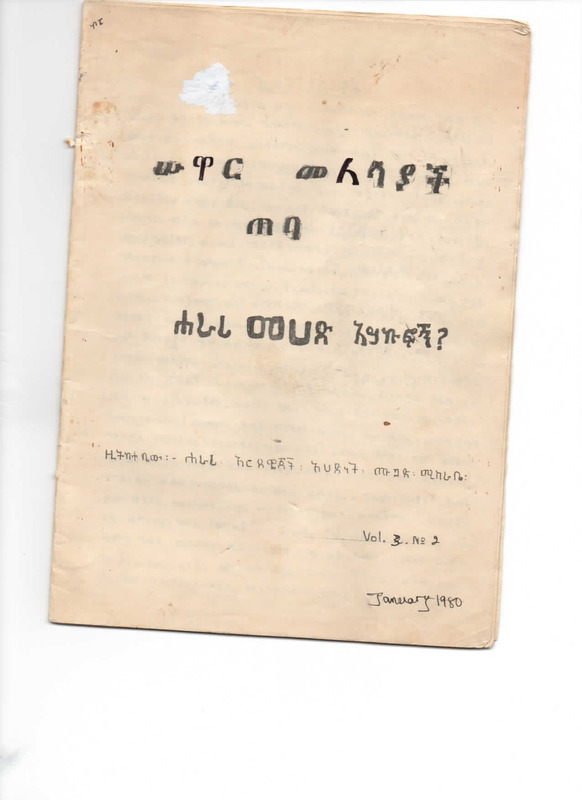 Sawar Malasayach- Revolutionaries V3 .No.2Author: HarariesDate: Early 1980sSawar Malasaych was an editorial journal written in 1980 by Hararies living in Cairo, Egypt in exile. The papers addresses the Harari movement conditions and destiny.
 -
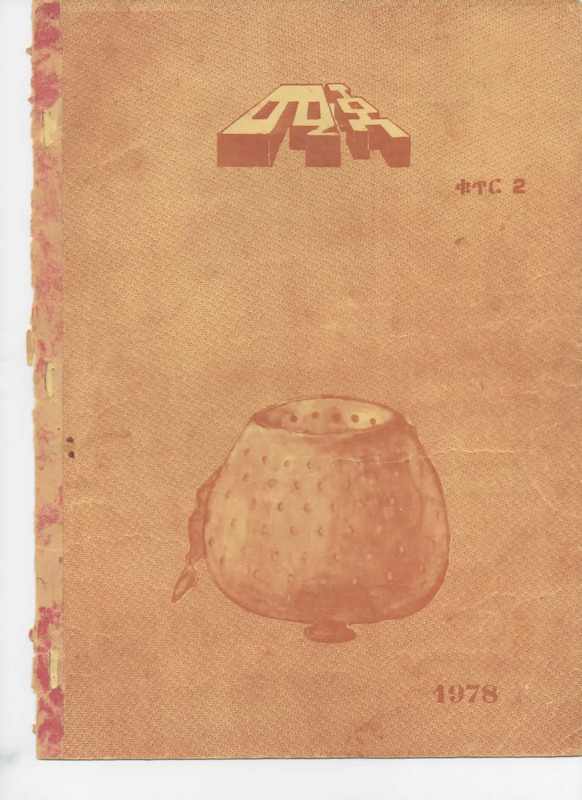
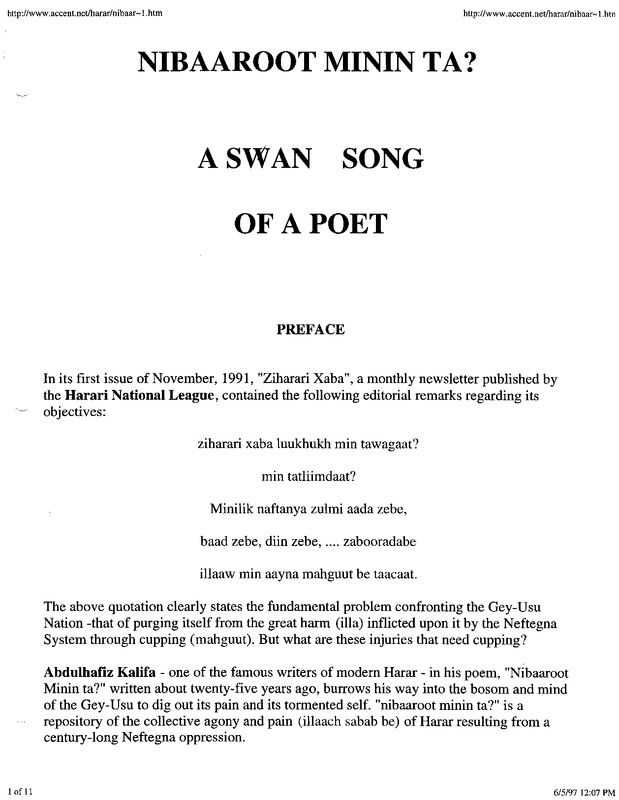 Nibarrot Mininta A Swan Song Of a PoetAuthor: Abdulhafz KhalifaDate:Nibarrot Mininta, Written b y Abdulhafiz Khalifa, is a repositary of the collective aggony and pain of Harar resulting from a century- long Neftegna repression....
 -
-
FalakAuthor: International Harari OrganizatiomDate: 1992The paper Discussess the organizations objective and it's future plans including the developing of relationship with Harar and HNL. Articles from Harari organizations located in different cities in US , and Canada are available in the periodical.
-
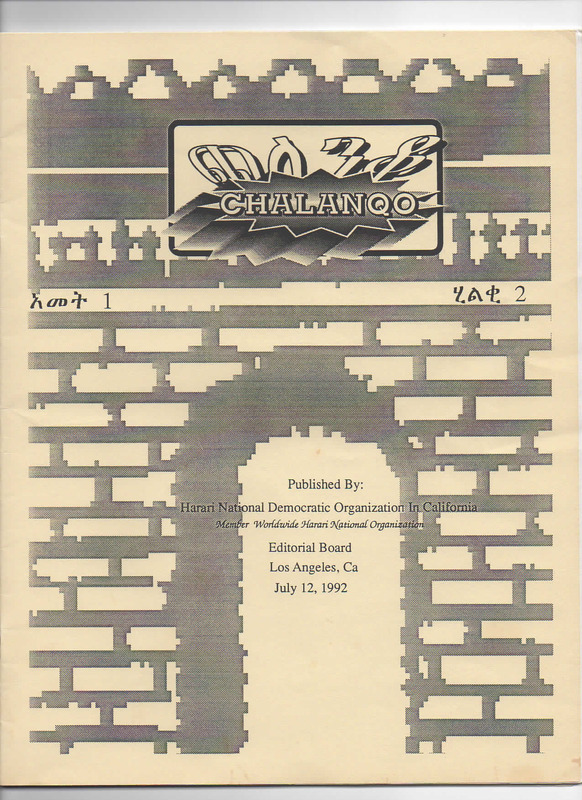 Chalanqo: Issue I, No:2Author: Harari Diaspora in AmericaDate: 1992Articles of Harari social issues, culture, politics and more are discussed.Most part is written in Geez phont except one article, "Harari Wedding" in English.
 -
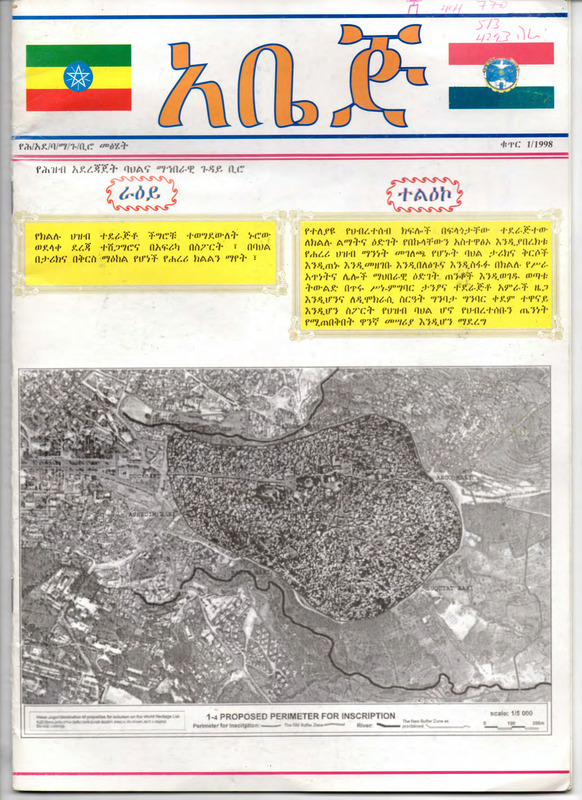 Abej 2Author:Date: 1998Articles reflecting History, Architecture, and important locations of Harar....
 -
Chat: Coffee’s rival from Harar, Ethiopia. II. Chemical compositionAuthor: A. D. Krikorian and Amare GetahunDate: 1973The early history, botany, cultivation, economics and sociological aspects of the use ofCatha edulis (Vahl) Forsk. ex Endl., commonly known as chat, have been presented in some detail. We have found general agreement in the literature as to the presence ofd-norpseudoephedrine in chat; the identity of the accompanying alkaloids is not at all certain. There is also disagreement as to whether or not the amounts ofd-norpseudoephedrine that have been determined occur in sufficient quantity to account for chat’s pharmacological action. Some investigators construe this as indicating the need for a holistic approach to the chemical pharmacology ofCatha edulis. Investigators claiming to have found additional alkaloids agree neither upon the number present nor upon their identities. It has been suggested that some of the anticipated additional alkaloids may well be congeners of others.
-
FROM THE SOMALI COAST THROUGH SOUTHERN ETHIOPIA TO THE SUDANAuthor: OSCAR NEUMANN.Date: 1902In the spring of 1899 Baron Carlo von Erlanger asked me to join an expedition to Somaliland, which he intended to undertake for the sake of sport and ornithological research. I agreed on condition that the journey should not be confined to Somaliland, but should also extend to the countries of Southern Ethiopia. The preparations took nearly half a year. Meanwhile the revolt of the mad Mulla had broken out, and the western route proposed by myself proved to be the only one possible, as the Foreign Office was forced to recall its permission to penetrate the hinterland of Berbera, and we were therefore obliged to set out from Zeila by the old caravan route to Harar. The members of the expedition were Baron Carlo von Erlanger, Dr. Hans Ellenbeck as physician, Mr. Johann Holtermuller as cartographer, Mr. Carl Hilgert as taxidermist, and myself. We started from Zeila on January 12, 1900, but an accident to Mr. Carl Hilgert, who nearly killed himself with a small flaubert gun, stopped us at the wells of Dadab, only three marches from the coast, so that we did not arrive at Harar until the beginning of March. In the desert Baron Erlanger and myself preceded the caravan in order to meet Mr. Alfred Ilg, the foreign minister of the Emperor Menelik, who was on his way to the coast, and to whose valuable help a great part of the success of our expedition is due. But in the first place we have to thank the Emperor Menelik, that intelligent ruler and restorer of an ancient and great empire, for his help and permission to pass through his country.
-
A TRIP TO HARAR AND IME.Author: Captain H. G. C. SWAYNE, R.EDate:captain Swayne, who has been on a sporting expedition in Somaliland, writes from Aden:—I started from Bulhar on February 16th, 3,nd went to Jig-Jiga, where I found an Abyssinian guard of twenty -men posted in their stockaded fort over the wells. I had twenty-five Somalis, all told. Next day, an Abyssinian chief called Banaguse Ei Taurari marched into the stockade from Gqjai, about 20 miles to the west, accompanied by about three hundred and fifty horse and foot, to resist the supposed invader, the Somalis having exaggerated my trip into a British invasion. Nearly all the Abyssinians carried good Keniingtons. Banaguse seemed inclined at first to arrest me, but on hearing I had come up in order to visit Kas Makuwan, the Harar governor, he was afraid to do so. I sent a letter to Makuwan, and after I had waited at Jig-Jiga a few days, one Gakatagli came with a very polite note from the Eas, asking me to come to Harar. On nearing Harar I found I had to pass through two lines of soldiers, to the number of about a thousand, brought out to escort me, by order of the Kas, who is very hospitably inclined to the English. Each company presented arms as I passed along the path between the lines. I remained at Harar five days, a guest at the house of Alaka Gobau Desta; and before leaving I gave the Kas an Indian tiger-skin and an album of Indian photographs; receiving in return his photograph, a silver-mounted shield, spears, saddlery, and a good mule, also <a passport ordering any soldiers whom I might encounter in Ogaden to treat me courteously. I also received much kindness from Count Salimbeni and the Europeans at Harar.
-
-
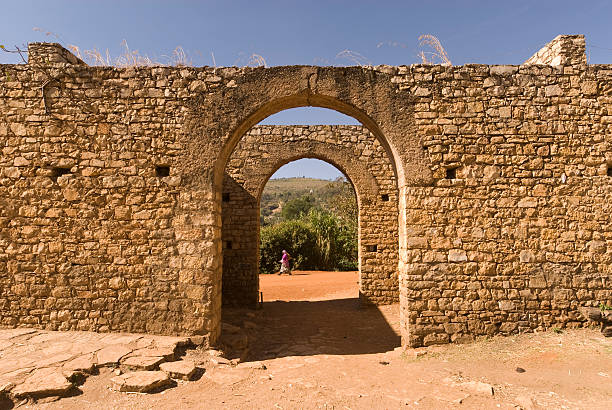
HARRARAuthor: PAPERSPASTDate: 2 April 1936HARRAR A MOSLEM CITY THE GARDEN OF ABYSSINIA (Written for "The Post" by W:S.R.) The bombing of Harrar, with ruthless slaughter of civilians, adds another to the many previous indictments of the Italian conduct of the Ethiopian campaign. Swedish, American, British, Egyptian, as well as Ethiopian Red Cross stations have all been the targets of the Italian aerial offensive, according to the indubitable testimony of scores of witnesses of the highest character. One would think -that if it were not possible for. civilised nations to invoke against the aggressor oil sanctions and stop these bloody massacres, there should in the name of common humanity be a mobilisation of shame against these persistent violations of every humanitarian instinct. But the only imperative of modern warfare seems to be victory at whatsoever cost, and by whatsoever means. The city of Harrar is beautifully situated ,on a hillside at an elevation of 5500 feet above the sea level. It enjoys an excellent climate, and is the centre of a fertile province. The landscape is said to be of surpassing beauty. Coffee plantations flourish throughout the province. These are here and there interspersed with forests of valuable timber of pine, cedar, and juniper. Its mountains rise to 9000 feet above sea level. Its beauty and fertility have earned for it the name of "The Garden of Abyssinia" The city was built several centuries ago by the Arabs. The population to-, day is about 60,000, most of whom own allegiance'to the Moslem, faith. The better class of buildings, . such as mosques, churches, consular dwellings, and the homes of Arab traders who control the commerce of the city, are of stone. The poorer houses are of rubble..The city is encircled by an ancient stone wall with twenty-four towers. The entry and exit are through five gates. At the outbreak of the war the wall was breached by the authorities in several places, to give the people readier exit in case of attack. Harrar is connected by a good motor road with Diredawa, a town mid-way between Jibuti and Addis Ababa on the railway. It is 200 odd miles distant from the capital. RAS MAKONNEN'S CONQUEST. The city and province, though once part of the kingdom now known as Ethiopia, for many centuries was under Moslem rule, and acknowledged the suzerainty of Egypt. When in 1884 the Egyptian Government was weakened through the Mahdi's conquest of the Sudan, the garrison of Egyptian soldiers was withdrawn from Harrar. This diminished the power of the ruler, the Emir Abdillah. When .in 1337 Ras MakonnSn, father of Haile. Selassie, invaded the province with 8000 Ethiopian warriors,, the 'city fell an easy prey to Ethiopian arms. The Emir was dethroned, and the province became part of the Ethiopian Empire. Has Makonnen, who was nephew-of Menelik, then King of Shoa, was appointed Governor. He was described as a cultured," humane, and enlightened ruler. It was in Harrar that his son Taffari, now the Emperor Haile Selassie, was born. He was educated at a French Roman Catholic Mission there, the buJdings of which are reported as having been destroyed by the recent aerial bombardment. On the death of Has Makonnen his son Taffari succeeded to the Governorship of the province, and it still continues under the Emperor's control. Haile Selassie owns also vast coffee plantations in the district, During the Great War Harrar became involved in a grandiose scheme of which Lij Nasa (Joseph) was the central figure. When Menelik II died in 1913, his nephew Lij Nasa, then a youth of seventeen, succeeded to the imperial throne. He is said even then to have been a dissolute craven. The Abouna was averse to crowning him Emperor, because of his evil habits, and also because of his flirtation with Islam. After the outbreak of the Great War emissaries were sent from Turkey and the Central Powers to stir up trouble in Ethiopia against the Allies; These gained the ear of Lij Nasa, and he became obsessed with the dream of a vast North-east African Moslem Empire to embrace Egypt, the Sudan, and all Somaliland, with headquarters in Abyssinia, and himself as Khalif, or supreme head. Lij abandoned the capital, Addis Ababa, for the more congenial company of . his Moslem subjects at Harrar. While at this centre he exchanged letters arid presents with Mohammed bin Abdulla Nassau (the Mad Mullah), who was leading a Jihad, or hoiy war, against British rule in Somaliland. On account of his Moslem proclivities, the Abouna, at the instance of Ethiopian nobles, dethroned Lij Nasa in 1916. It fell to Has Taffari Makonnen, then in his early twenties, to lead the campaign against the dethroned Emperor. The Emperor's forces were hopelessly defeated and he was taken prisoner. Summary vengeance was taken against the Harrar Moslems who were involved in the conspiracy. The aunt of Lij Nasa, Zauditu (Judith) was declared Empress, and Ras Taffari Makonnen, Regent. ! The Mullah hoped that the execution of the Harrar Moslems by Ras Taffari would Jead to a general rising of Moslems in Harrar, Ogaden, and throughout Somaliland against their "infidel" rulers. But Moslems in general felt that their slain co-religionists deserved their fate through being fooled by such a creature as Lij Nasa. In the present deplorable strife the Moslems of Harrar and throughout the Empire have shown no disposition to favour Mussolini against Haile Selassie, and, the wanton destruction of Harrar ' will deepen the mistrust of Italy, which is general throughout all Arab lands. 'I
-
Arthur Rimbaud, Coffee TraderAuthor: Richard GoodmanDate: 2001When Arthur Rimbaud (1854-1891) abandoned poetry altogether in 1873, at the age of 19 or 20, he left behind a small, incendiary and revolutionary body of work that included "The Drunken Boat," A Season in Hell, and Illuminations, a series of mystical prose poems. He had come out of nowhere, from the small town of Charleville in the Ardennes. His parents were not literary. He began writing poetry at 13, serious poetry at 16. He came to Paris and befriended the poet Paul Verlaine. They had a tempestuous relationship which culminated in Verlaine's shooting Rimbaud in the wrist in a fit of hysteria. Verlaine went to prison; Rimbaud, after completing A Season in Hell, burned his papers and stopped writing altogether. All this in three short years. From that point onward, Rimbaud led an itinerant life marked by an insatiable restlessness and, especially in the end, a concerted and frustrated quest for money. His wanderings took him from one unlikely place to another: from Indonesia, where he deserted from the Dutch colonial army; to Scandinavia, where he interpreted for a touring Danish circus; to Cyprus, where he supervised road-building gangs; and, finally, in 1880, to Aden in the British protectorate of Yemen near the southern entrance of the Red Sea. Intermittently, he returned—or was repatriated, sick or penniless, by the French diplomatic corps—to his family in Charleville. It was a life from which literature was completely absent. As far as I can determine, in all the letters he wrote to his family during these last years, he never once mentions literature. (He does mention books, but they are invariably technical or instructional ones.) He certainly never wrote poetry again. He did write, though: He published several pieces on East Africa, including a treatise on Ogaden that appeared in the bulletin of the French Geographical Society. It was decently, though not memorably, written, but its author hardly seemed the same Arthur Rimbaud who had upset and forever altered the French literary world. In fact, like many before him and after, Rimbaud reinvented himself. The problem for posterity has been that with this reinvention, Rimbaud discarded his marvelous ability to spin words in the stars. When, some years later, Pierre Bardey's brother Alfred happened to learn that Rimbaud had written poetry and was revered in certain small circles in Paris, he confronted Rimbaud with this. Rimbaud seemed aghast: "Absurd! Ridiculous! Disgusting!" he said to Bardey. The Rimbaud who had written "The Drunken Boat" and A Season in Hell was dead and buried. The new Rimbaud wanted to make money. And, perhaps, to do some exploring and a bit of photography. This was the Arthur Rimbaud who arrived in Aden, Yemen in August of 1880: a different person entirely. At that time, coffee had become extremely popular in Europe, and especially in France. Though the plant was being cultivated elsewhere— notably in Java by the Dutch—the best coffee was considered to come from Yemen. Coffee had come into its own there. The name of the port of al-Mukha in Yemen had become synonymous with coffee, and still denotes a certain superior quality today. For years, Arab merchants and traders had kept coffee entirely to themselves. Releasing it at last to the outside world, they then held a monopoly on its trade. They knew a good thing when they saw one. Coffee's origin is placed variously in Yemen and Ethiopia, with most food historians now believing it to be the latter. Some believe that the word "coffee" derives from the name of the Ethiopian province of Kaffa. It was discovered perhaps as early as the ninth century, and the legend of its discovery was described by the French traveler Jean de La Roque in A Voyage to Arabia the Happy, published in English in 1726. La Roque writes that a goatherd noticed that after eating the berries of a particular bush his goats "leaped and frisked about all night." A local cleric heard of this and gave some of the berries to his disciples "to hinder them from sleeping, when they were called up to their prayers…." It was not a great leap from munching the berries to making a decoction of them, and from that to roasting the "beans" they contained before
-
Opening of the permanent exhibition of the Sherif Harar City MuseumAuthor: UNESCODate: 2008Opening of the permanent exhibition of the Sherif Harar City Museum On 24 December 2008, the Sherif Harar City Museum, located within the walled Jugol of Harar, Ethiopia, celebrated the opening of its permanent exhibition. The Sherif Harar City Museum’s collection was founded by the museum’s current curator, Mr. Abdulah Ali Sherif, who has painstakingly acquired regional cultural objects since the early 1990s. A significant part of the collection was donated to the museum by members of the Harari community who entrusted the care of their heritage objects to Mr. Sherif. Permanent exhibitions of the Sherif Harar City Museum include items from the following regional groups: Harari, Oromo, Amhara, Gurage, Somali and Argobba groups. The collection includes everyday items such as textiles, jewelry, coins, basketry and weaponry. A rich archive of historically significant manuscripts and music recordings are also on display. The Sherif Harar City Museum received financial and technical assistance from the UNESCO/Norwegian Funds in Trust Cooperation project "Preservation of the Collection for the Cultural Heritage of the Harar City Museum". This included support for the renovation of the Ras Tafari House (which hosts the museum), the making of an inventory of the collection, purchase of equipment, exhibition design and training of museum staff. Title Opening of the permanent exhibition of the Sherif Harar City Museum Short Description On 24 December 2008, the Sherif Harar City Museum, located within the walled Jugol of Harar, Ethiopia, celebrated the opening of its permanent exhibition. The Sherif Harar City Museum’s collection was founded by the museum’s current curator, Mr. Abdulah Ali Sherif, who has painstakingly acquired regional cultural objects since the early 1990s. A significant part of the collection was donated to the museum by members of the Harari community who entrusted the care of their heritage objects to Mr. Sherif. Permanent exhibitions of the Sherif Harar City Museum include items from the following regional groups: Harari, Oromo, Amhara, Gurage, Somali and Argobba groups. The collection includes everyday items such as textiles, jewelry, coins, basketry and weaponry. A rich archive of historically significant manuscripts and music recordings are also on display. The Sherif Harar City Museum received financial and technical assistance from the UNESCO/Norwegian Funds in Trust Cooperation project "Preservation of the Collection for the Cultural Heritage of the Harar City Museum". This included support for the renovation of the Ras Tafari House (which hosts the museum), the making of an inventory of the collection, purchase of equipment, exhibition design and training of museum staff. Source UNESCO Nairobi Publication start date 2009-01-20 9:05 am Publication expiry date 2009-01-20 9:05 am Author(s) of the present sheet Fumiko Ohinata Organizer UNESCO Nairobi Event Location Ras Tafari House City Harar Country Ethiopia Start date - Local time 2009-01-20 9:05 am End date - Local time 2009-01-20 9:05 am Type of event (generic) Exhibition Display related links & contacts in right column No Name of Contact 1 Fumiko Ohinata, UNESCO Nairobi E-mail address
-
 The Somali Youth League, Ethiopian Somalis and the Greater Somalia Idea, c.1946-48Author: Cedric BarnesDate: 39264In 1946 Makhtal established the SYC in Harar with himself as President. It is noteworthy that such an anti-British figure should head an important branch of what had been a very pro-British nationalist organisation. Indeed it seems Makhtal's initial presence in Harar was to complain against the British Military Administration and its continuing disarmament campaign in the Ogaden.38 Harar was an important spiritual and political centre for the Ogaadeen Somalis, and it was logical that the Somali political club should have a branch there. When Makhtal first arrived in Harar he was well received by the Ethiopian government, which saw him as an important historical ally in the Ogaden against British and Italian colonialism. Furthermore, in 1946 the SYC still appeared to an ally of Ethiopia, and the Ethiopian government saw that it could even be used to support claims for a greater Ethiopia, including not only the Ogaden but also ex-Italian Somaliland, or at the very least to prevent the restoration of the Italians to their former colonies. British sources report that while he was in Harar the Ethiopian government paid him a healthy monthly allowance.39 However, once in Harar Makhtal's politics began to change. Harar had been under full Ethiopian control since 1942 and like many areas of Muslim Ethiopia the local population did not wholly welcome restored Ethiopian government. Harari townsmen had been given a certain amount of privilege and promotion during the Italian occupation, resulting in a social and economic revival directly linked with the demotion of 'Amhara Christian' political dominance. But three years after the restoration of Harar to Ethiopia, Harari townsmen once again found themselves under the dominance of Ethiopian Christian outsiders, and had lost what social and economic gains they had made under the Italian regime. As a result of these grievances an ethnic Harari association was founded sometime in 1945 or 1946, which is remembered today with two Arabic titles, the jam'iya al-wataniya or jam'iya hurriya al harariya, translated respectively as 'the nationalist society' or 'the society for Harari freedom'.40 However when Makhtal Daahir established the SYC in Harar, the smaller Harari society allied itself and merged with the club, presumably to achieve more political influence. After exposure to the restored Ethiopian government in Harar and the local resentment it had engendered, Makhtal began to see the Ethiopian government as just as detrimental to Ogaadeen and Somali aspirations as he considered the British to be. British sources record that Makhtal's nationalism was further spurred by being kept waiting in Addis Ababa for an audience with the Emperor where he met several Eritrean Muslims who influenced his attitude to the restoration of Ethiopian rule.41 By early September 1947 Makhtal left Harar and returned to the safety of Ogaden, still under British Military Administration where the Ethiopian police had no jurisdiction. However, BMA jurisdiction did not deter the Ethiopian government from flexing its muscles in Jigjiga in the RA where Ethiopian police attempted to arrest the vice-President of the Harar branch of the SYL, Haji Kalile Ahmed, but where large numbers of SYL members prevented him being taken to Harar.45 In another symbolic act signalling the Ethiopian sovereignty of the Ogaden, the Ethiopian government granted a concession to the American Sinclair Oil Company to prospect for oil in the Ogaden still under the BMA.46 This was a clear sign that the Ethiopian government would now push for the return of the RA and Ogaden. Furthermore, in the face of an increasingly belligerent SYL and in anticipation of regaining control of the RA, the Ethiopians appointed a more vigorous Ethiopian representative in Jigjiga whom the British officials described as 'a senior official of strong anti-British persuasion to check the growth of the SYL in Jigjiga'.47 The Ethiopian government, not without foundation, strongly suspected that the British were fostering the growth of the SYL.48
 -
Italian Bombs Destroy HararAuthor: The Milwaukee SntinelDate: 1936Harar, the second largest city in Abyssinia, was practically destroyed to-day, when 37 Italian bombers engaged in a mass air raid on the city.
-
A leap of faithAuthor: Al-Ahram Weekly, Gamaml NkrumahDate: 2003arly Muslims looked beseechingly to Ethiopia and sought refuge in its territory from their persecutors, the polytheist Arabians. But the Christian kingdom, besieged for 15 centuries by Islamic states that formed a formidable ring around it, refused to succumb to the new religion. Gamal Nkrumah explores the often contentious connection between Ethiopia and Islam -------------------------------------------------------------------------------- Since time immemorial Ethiopia has retained her supercilious air. Throughout the centuries, the rugged Nile Basin country, bound to Islam from the religion's inception, has attracted scant attention compared to Egypt. Ethiopia's seclusion, however, did nothing to dispel its mystique. Ethiopia's ambiguous identity fascinated those outsiders who cared to take a closer look. Black, but not black enough. Christian, but only partially so. At once both primitive and civilised. Numerous Arab and Muslim chroniclers have lavished praise on the only land beyond Arabia's borders that Prophet Mohamed turned to in his hour of need -- the only country that responded positively to his call for assistance. Perhaps the most important Arab treatise celebrating the special role Ethiopia played in early Islam was Jalal Al-Din Al-Suyuti's seminal work Raf^ Shan Al- Hubshan (The Raising of the Status of the Ethiopians), written in the late 15th century. It was an earnest plea to reaffirm the equality of the races in Islam. Ahmed Bin Ali Al-Maqrizi, who in 1435-36 wrote Kitab Al-Ilmam bi Akhbar man bi-Al- Habasha min Muluk Al-Islam (The Book of True Knowledge of the History of the Muslim Kings of Abyssinia), focussed on the mediaeval Muslim sultanates in the Horn of Africa, including those within the country today known as Ethiopia.
-
-
To The Bosphore ÉgyptienAuthor: Arthur RimbaudDate: 1887On the road from Hérer, Dedjatch Mékonène, representing the King in Harar, has shipped from Harar to Shoa 3,000,000 rounds of ammunition, and other munitions that the English commissaries ordered to be abandoned for the profit of Emir Abdoullahi during the Egyptian evacuation. This whole road was impressively constructed for the first time by M. Jules Borelli on his recent trip to Harar in May 1886. It is geodesically connected to the topography and is parallel to the Itous Mountains.
-
-
Evolution of Smallholder Mixed Farming Systems in the Harar Highlands of Ethiopia: The Shift Towards Trees and ShrubsAuthor: Eshetu Mulatua Habtemariam KassaaDate:The paper reports on the major changes observed in the farming systems of the Harar Highlands of southeastern Ethiopia, with special emphasis on the shift towards trees and shrubs. The study was undertaken during two time periods, 1985-1987 and 1997-1998 with the objectives of characterizing the production systems and their trends, and utilizing information so gained to guide research and extension activities in the study area. It was observed that the farming population had increased, land and large stock holding had decreased slightly, and that crop production was under increasing threats from various scourges, notably pests, weeds, and diseases. In the face of these changes, farmers continued to search for alternative strategies, and the major trend noted was the shift towards naturally growing and cultivated tree and shrub species in general and khat (Chata edulis (Vahl) Forsk. ex Endl.) in particular. This shift increased farm income and promoted crop-livestock integration, thereby improving household food security and enhancing sustainability of smallholder mixed farm systems. The importance of khat to the regional economy was also found to be growing both in the livelihood systems of the people in the study area, and in terms of foreign currency earnings. Despite the critics against the ever-increasing culture of khat, it is argued that the shift towards a khat-based farm economy was unavoidable, and, in the absence of other feasible alternatives, khat production and marketing would remain important to the livelihood systems of people in the study area. In view of this, the roles of the tree component in the farming systems should be duly considered in planning research and extension undertakings in the smallholder farms of the Harar Highlands of Ethiopia.